Friday, May 10, 2013

Granny takes a trip

While in Sydney we wandered from the vicinity of Chinatown south-eastwards to Paddington.

One website describes the suburb in these gushing/uber-cool terms" "A luxe, boutique-strewn suburb, Paddo is famous for fine threads, pretty residents and a very Eastern Suburbs private school vibe. And let's face it: that's why we love it. Come here to be transported. Narrow William Street's got you sorted for high-end duds, while all the Big Shops have a home on Oxford Street."

We didn't make it as far as Williams St, but we did traverse a small portion of Oxford St.

We were taken by some of the 'retro' boutiques in Crown St - 'retro' because they specialise in clothes & accessories from the 60s and 70s.


One in particular took my eye - Grandma Takes A Trip!

When I saw it I was convinced it was named after an obscure 60s pop song by one of the British underground psychedelic bands like the early Pink Floyd. The shop assistant didn't know much about it, but did think it was named after a shop in London in the "swinging sixties".

A little research after I got home showed I was NEARLY right!

There was both a shop AND a song. According to Wikipedia "Granny Takes a Trip was a boutique opened in February 1966 at 488 Kings Road, Chelsea, London, by Nigel Waymouth, his girlfriend Sheila Cohen and John Pearse. The shop, which was acquired by Freddie Hornik in 1969, remained open until the mid-70s and has been called the 'first psychedelic boutique in Groovy London of the 1960s' ".

The song was called - strange to relate - "Granny Takes a Trip" and was written & recorded by a group called The Purple Gang - one-hit wonders.

YouTube is also a useful source of content.

This clip has a wonderful promo clip from 1967 for the single

A second clip is a BBC interview with one of the founders, John Pearse.

And to prove that aging hippies don't die - they just move north, have a look at The Purple Gang performing the song at The Castle Pub in Macclesfield about 2007!

Ah me - now if I could only find another shirt made of fabric with a pattern of Groucho Marx heads on it!

Wednesday, May 8, 2013

Tales From The Trunk # 5

Prison-time for Joe

James & Margaret Mulligan had a younger brother, Joseph Edward, born about 1859.  Joe was to become a convicted felon and spend time in jail.  And to get a number of mentions in the British Parliament.

It transpired like this.

According a Mr. Lonsdale ( MP for Armagh, Mid.), "on Sunday the 11th February [1906], a mob of 300 persons, headed by Mr. Thomas Smith, J.P., chairman of the Cavan Rural District Council, Mr. Fitzpatrick, D.C., and Joseph Mulligan, an evicted tenant, marched on to the farm of Peter Brady, near Ballyhaise, tore down fences and held a meeting, at which threats were uttered against Brady."

By the time Lonsdale raised the matter in Parliament, the matter was the subject of "proceedings in the Land Judge's Court which resulted in an order by the learned Judge for the attachment of the persons named in the Question."  It appears that "attachment of the persons" meant they were imprisoned.  Lonsdale raised the matter during Question Time on 15 March 1906.

5 days later, MR. Dillon (Mayo, E.) asked a series of questions on the same matter of "the Chief Secretary to the Lord-Lieutenant of Ireland", to which Mt Bryce replied, in part, "I understand that these persons were charged with contempt of court in taking part in an unlawful assembly, the object of which was alleged to be to intimidate the holder of a farm which is under the control of the Court."

There followed a brief flurry of comment focussing on the iniquity of a judicial system which allowed for ordering "unlimited terms of imprisonment", with the effect that "they may be kept in prison for life unless they plead guilty of a charge which they deny having committed".

On 28 March, a further exchange occurred which dealt with the conditions under which the 3 were held (locked in cells for 22 hours per day) and could receive visitors (watched over by guards ready to take notes).

John Redmond and Sir Edward Carson, both notable National MPs, felt moved to become involved.  There followed an attempt to clarify the role of "Mr. Arthur Forbes, ... sub-sheriff for County Cavan".  Redmond summarised his role thus:  "Then the person who initiated the proceedings and obtained the order of attachment afterwards as sheriff executed it?"  Odd, to say the least.  Bryce agreed Redmonds view was correct.

2 months later, on 28 May, in answer to a question from MR. P. A. McHugh, Bryce told the House, "I am informed that the three men named were released on April 23rd, on the completion of one month's imprisonment, by an order of the Land Judge's Court. The order of release was unconditional."

One of Joseph's descendants, Sheila Openshaw, provided the links to this Tale, and also added, "Mum told me he spent a night in prison & when I rang (Uncle) Bob on the farm at Lisnashanna he told me it was 6 months!  My grandad Frank had to do the ploughing & keep the farm running when he was just 11 years old whilst his dad was in prison.  Seems that he was in Dundalk Prison for a month."

The exchanges mentioned above can be found online at:
http://hansard.millbanksystems.com/commons/1906/mar/15/ballyhaise-disturbances
http://hansard.millbanksystems.com/commons/1906/mar/20/commitments-for-contempt-of-court
http://hansard.millbanksystems.com/commons/1906/mar/26/commitments-for-contempt-of-court
http://hansard.millbanksystems.com/commons/1906/mar/28/imprisonment-for-contempt-of-court
http://hansard.millbanksystems.com/commons/1906/may/28/irish-contempt-of-court-prisoners

Joseph's place in our family tree can be understood at
http://ourfamilyhistory.co.nz/mulligans/charts/mulg03.html#157

Monday, April 29, 2013

A few days in Sydney

We've just had a few days on holiday in Sydney, ostensibly to visit an exhibition about Alexander The Great.

Really, it was just an excuse for a few days away and a change of routine.

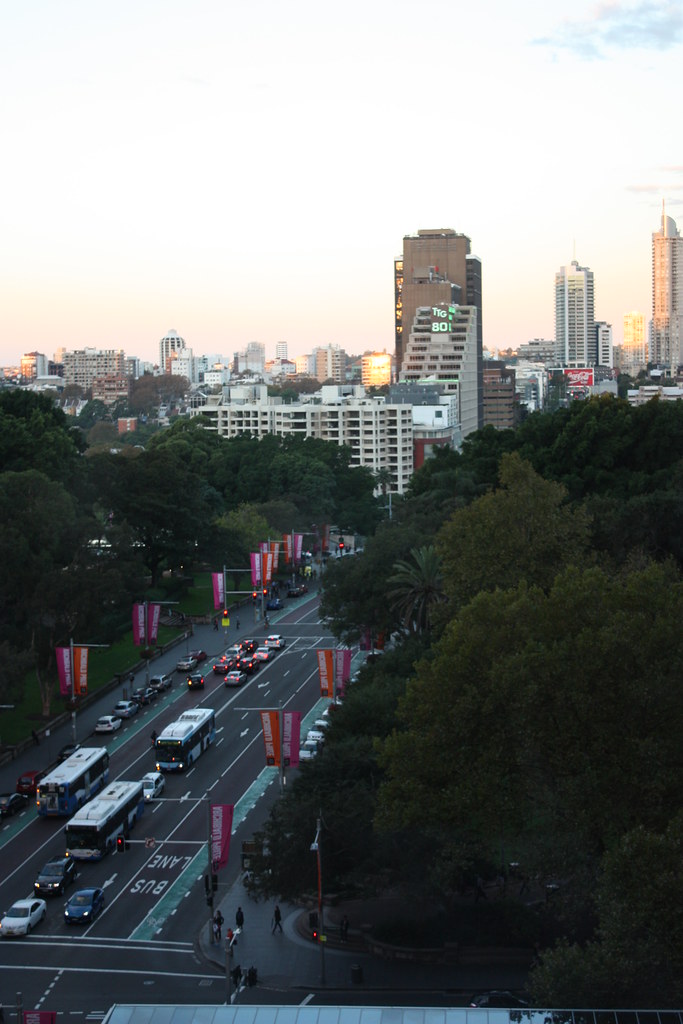
We stayed in an inner-city hotel on Park Street between Castlereagh and Pitt streets. That means we were a stone's throw away from Hyde Park and from there The Domain.


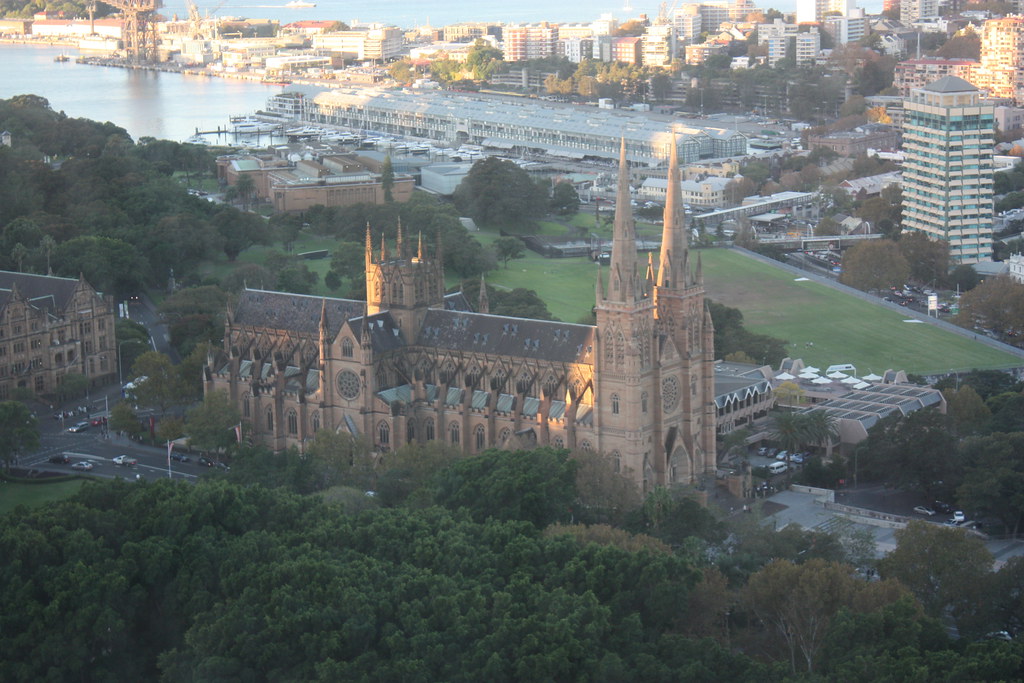
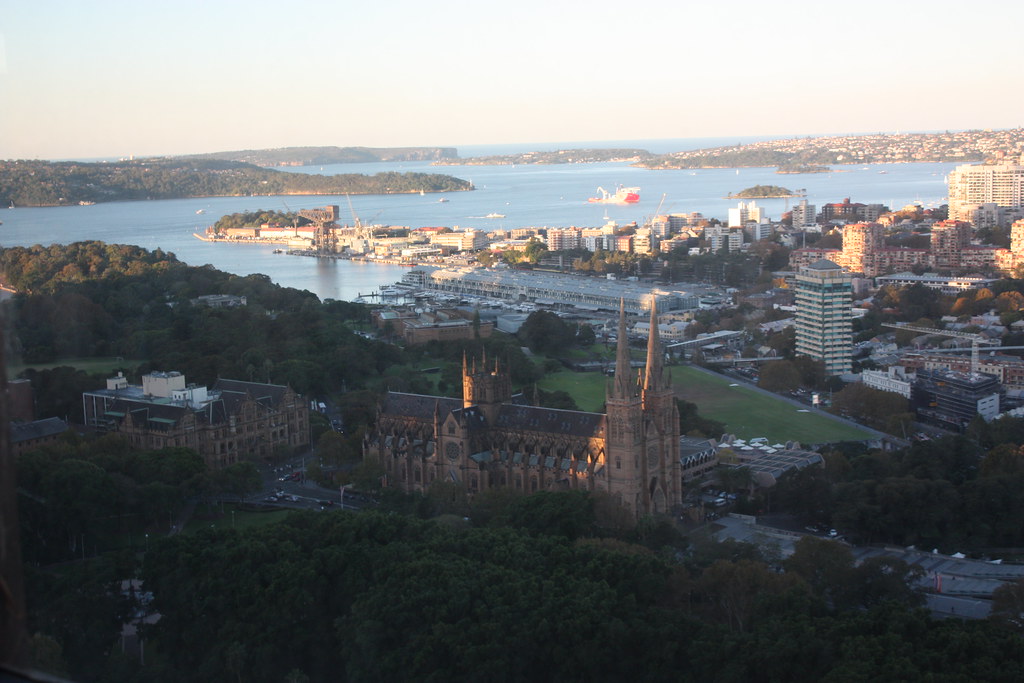
Between Hyde Park and The Domain is College Street, on which is St Mary's Cathedral. A very impressive Catholic Cathedral.

To give a sense of perspective, the building in which our hotel was located was 45 storeys high. Our room was on the 14th floor, from where I took the two photos of Park Street above. And at the top was a swimming pool (!) and the guest laundry. We went up to have a look, you can see the view was very impressive, although I was decidedly uncomfortable taking the photos!


Monday, April 8, 2013

Tales From The Trunk # 4

Spying Out The Land

We have come to think of the Edie clan as inextricably linked to Otago, and particularly to Central, or the Blue Moutains area.

But it nearly wasn't to be so.

The Tuapeka Times in October 1882 carried a story entitled "A TRIP TO GISBORNE, NORTH ISLAND" and sub-titled "Spying out the Land."

The story was supplied by John Edie (Senior) and begins:

"I left Lawrence by the 2.45 train on the afternoon of Monday, 2nd October, and reached Dunedin shortly after 7 o'clock. On the following afternoon, I left the metropolis by the 2.30 train for Port Chalmers, which was reached in half-an hour. At 4 o'clock, the s.s. Wairarapa, bound for the Northern ports, left the wharf, and in half-an-hour's time the Heads were cleared."

He was sailing north, headed for Christchurch by way of Lyttelton initially. En route he engaged in a bit of sight-seeing.

"During my stay (in Christchurch), I visited the Cathedral— the leading feature of Christchurch - and also the Museum; with the wonders of the latter I was greatly pleased."

Then it was on to Wellington and Napier, before he finally reached Gisborne "at six o'clock on the following morning. Here also we had to anchor in the bay, and take advantage of a small boat to reach the shore. It appears that the bar at the mouth of the river is not navigable to the larger class of steamers."

He cast an experienced across the landscape: "All the land has to be cleared; it is covered with dense scrub and fern: shortly afterwards it is sown down in artificial grasses- there being no natural grass in the neighborhood worthy of the name. The climate is remarkably fine, and stock sheep chiefly thrive amazingly well. While in Gisborne, I was asked by a friend to accompany him on a visit to Mr W. B. Johnston's estate, fourteen miles from town. Mr Johnston is the possessor of 12,000 acres of freehold... I was told by Mr Johnston, who treated us very hospitably and took us through his estate, that the land carries three sheep to the acre all the year round - an unmistakeable proof that the land when sown down in English grasses is really good."

John (Snr) was clearly not a 'stranger in a strange land': he met up with "the Rev. Mr M'Ara, Presbyterian minister (who at one time held a charge in the Clutha district), I visited Mr G. Bruce's homestead, ... Mr Bruce, I might add, was at one time a resident of Murrays Flat, Waitahuna. ... [and was interested in a sale of land managed by] The New Zealand Loan and Mercantile Agency Co., of which Mr R. Hill Fisher, formerly agent of the Bank of New Zealand at Tapanui, is the local manager."

But the eye-opener is his passing comment that "While there, I had my eye to some fine pastoral land - a block of 8000 acres in extent. I did not make final arrangements for securing it from the aboriginal owners, as business arrangements caused me to hasten to Dunedin a week earlier than I intended."

So it might so easily have been the "The Edies of Ormond" or some other location near Gisborne!

Sunday, March 31, 2013

Tales from the Trunk # 3

Cumnock Poisoning Case

A member of the Bryson family was, in late 1906, the victim in The Cumnock Poisoning Case.

It came about like this.

Mungo Bryson & Grace Dickie had a number of children. One, Agnes, brought her family to New Zealand in 1863. A second, Margaret, married William McKerrow in 1840.

Grace Dickie McKerrow was the fourth child of William McKerrow and Margaret Bryson. Grace was unmarried and had her own home in Ayr when her Aunt Grizzel, her father’s half sister who had married William Lennox, a farmer, in 1863, died after an illness in 1904. William Lennox had been ill at the same time. Grace, who had been looking after her Aunt before her death, was pressed by her to continue to look after Mr. Lennox. This Grace reluctantly agreed to do. She sold her home, except for a box of books she gave to a friend, and moved to Cumnock as housekeeper to the then deaf, elderly, childless, and retired William Lennox.

In 1906, a mysterious parcel arrived, containing a tin of shortbread with a card saying "With happy greetings from an old friend".

A few days later Grace had some of the shortbread and within an hour and a quarter, Grace had died in great pain.

The police investigation lead, a few days later, the arrest of Thomas Mathieson Brown of New Cumnock.

Following a preliminary hearing on 8th March, the case against Brown was heard before five Judges in the court of Justiciary, Edinburgh, on 18th, 19th and 20th March 1907.

Brown had a History of epilepsy for some forty years. and had shown signs of insanity.

The jury returned the verdict that the accused was "now insane" by a majority believed to be 11 to 4. Brown was ordered to be detained during His Majesty's pleasure.

Grace was well liked and respected. The "Scotsman" referred to her as a "lady of much intelligence and a rare amiability of character" (26 November 1906).

Saturday, February 23, 2013

Of bugs & beasties

I have often reported on the visits of birds - kingfishers, tuis - to our backyard which have delighted me.

But recently it has been the turn of other animals to come calling.

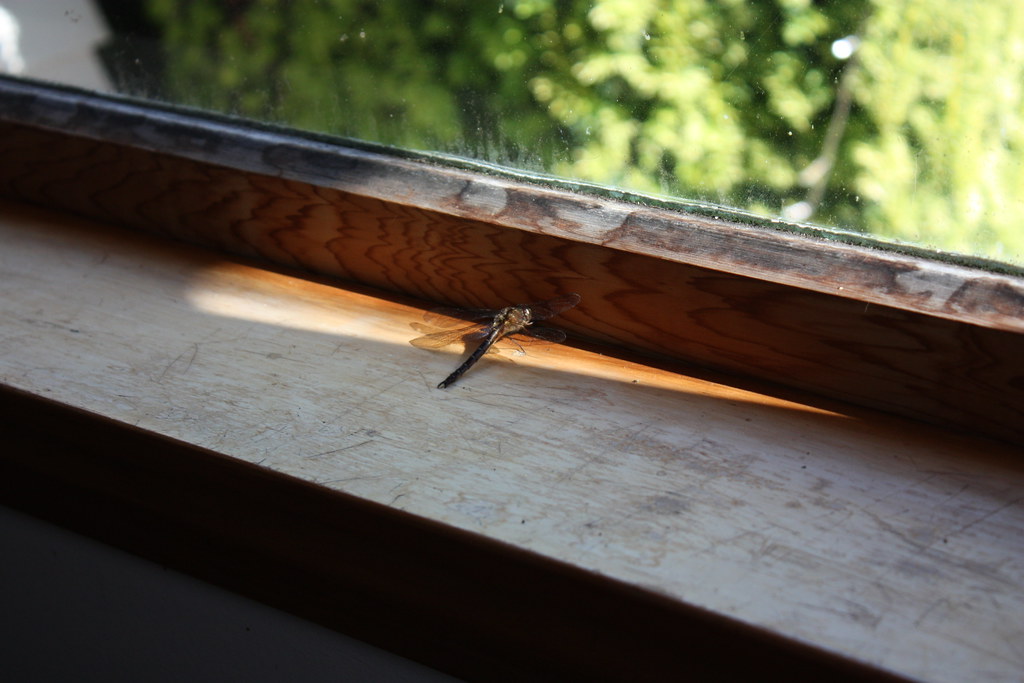
I got home from work one day to discover a dragonfly inside the house and trying to get out. Needless to say I took photos and THEN released it!


And then yesterday, while mowing the lawn I had to work around a monarch butterfly who had decided it need a rest on the back lawn. I tried picking it up and putting it on some leaves on a tree, but it seemed to prefer the grass! So I worked around it until it decided it was time to move on.

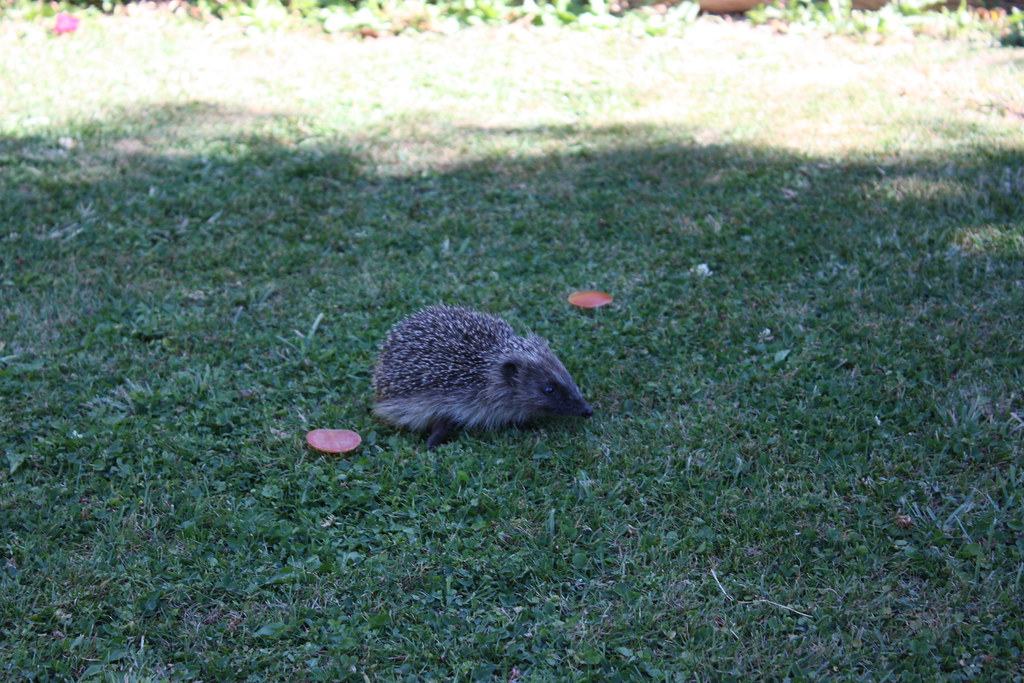
And, finally, later the same day, in the mid-afternoon sun & heat, a curious hedgehog came out to wander around the lawn. It was bewildered by the noise of my camera, took fright and scuttled back into the undergrowth, presumably heading back to bed!


Thursday, February 21, 2013

Four years for a government?

At Waitangi earlier this year John Key suggested a four-year term for a government.

"My view is that there should be a four-year fixed date of Parliament.

"I think it makes a lot more sense to know when the date is fixed and I think it makes a lot more sense to have it for four years," Mr Key said.

Actually, that is 2 separate issues, casually mixed together.

Firstly, a "fixed date".  difficult to know just what he's on about.  If he means that the election will be at a specific date, that is likely to impose a degree of inflexibility which may be impractical.  More sensible would be to say that the election must be held on a date withing the month of, for example, November.  More flexible, but still definitive enough to be binding.

The second issue is the length of the parliamentary term - 4 years in his suggestion.  I appreciate that New Zealand is unusual in having such a short term for the entire Parliament and government; for example, in the US, only part of the House of Representatives is elected every 2 years.

I have 2 objections to the suggestion of a 4-year term.  Firstly, I am conscious that there have been in the past, and almost certainly will be in future circumstances in which a government feels compelled to seek confirmation of it's right to govern.  The most recent instance was Muldoon's decision to call an election in 1984, which his government lost.

The reverse of the same coin is when a government loses the support of MPs (it's own or others) and so cannot command majority support to govern.

In both instances a government may need to call an election well before the end its term.  Being locked into a fixed four-year term would cause very considerable difficulties.

More fundamentally, in my view is the role of the 3-year term plays as a substitute constitutional safeguard.

The Executive in New Zealand has very considerable power and authority to act, even contrary to the wishes of a large portion of the public.  There is no Upper House to keep a check on excesses; the judiciary is narrowly constrained; and the Governor General has, at best, an advisory role only.  Forcing a government to call an election within a maximum of 3 years from it's own election allows for citizens to vent their anger if they feel they have been betrayed by the government.  Certainly that was the fate of the fourth Labour Government, after the damage wrought by Roger Douglas and the rest of his right-wing brigade in the 1980s.

I would hate to see the ability to exercise this power watered down.

Finally, as an aside, the story about this article on Stuff claims "the constitutional landscape was again the topic of discussion at Waitangi". But one wonders about the significance of Key's suggestion, and to whom it was made. Because a reading of the speech he delivered makes absolutely no mention of the 4-term year issue. Hmmm. So what's going on? Kite-flying, anyone?